
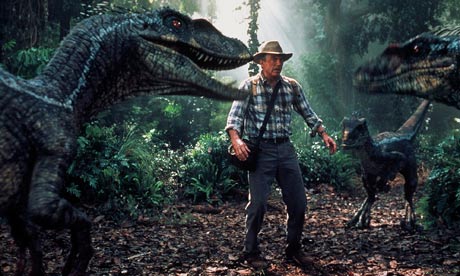
Another narrative theory is Tzvetan Todorov's. It bases itself around the storyline events following a set theme: Equilibrium, Disequilibrium/Disruption, Solving, New Equilibrium/Restored. This is often really common in films by Steven Spielberg. For example, War of the worlds follows it by there being an equilibrium at the beginning with part of the family being together, disrupted by the alien invasion, partially fought during the film and then ending with the aliens dying and harmony restored. This is very similar in the Jurassic Park films.
Roland Barthes' theory bases around the idea of enigma codes and mystery being developed throughout the film. It's slowly revealed by the characters and the audience discovering more at the same time. He also uses the idea of action codes, hearing a sound which suggests to the audience what is to follow. For example, when people here the Jaws theme tune, they quickly assume the shark is approaching and someone is about to be attacked.
This has allowed me to think about more ideas for my graphic narrative. The ideas I can take from the narrative theories will really help me create the back bone and a strong foundation for the development of the graphic narrative.

No comments:
Post a Comment